
Leave Your Message



From Beginner to Advanced: How to Precisely Match Weightlifting Belts for Fitness Enthusiasts at Different Stages?
Abstract: As a core item of protective equipment, the selection logic of Weightlifting Belts varies significantly with the experience level of fitness enthusiasts. This article focuses on the differentiated needs of novice and experienced trainers, analyzes the impact of belt support strength, material craftsmanship, and wearing fit on training safety and efficiency, and provides a professional perspective for procurement decisions.
In the field of strength training, weightlifting belts have long transcended their single role as "basic protection" and have become a key link connecting training goals, physical adaptability and the scientific nature of equipment. For the retail end, when dealing with people ranging from beginners who are new to squats to seasoned trainers pursuing extreme weights, how to recommend suitable Weightlifting Belts based on the actual level of users directly affects the purchase conversion rate and long-term user stickiness. Behind this lies a deep insight into the core needs, body control abilities and equipment dependence of trainees at different stages.
First, the novice stage: A protective logic centered on "adaptive guidance"
Training characteristics: For users undergoing systematic training for the first time (typically referring to those who have been exposed to barbell training for less than six months and whose squat/deadlift weights are less than 1.5 times their body weight), their core muscle recruitment ability is relatively weak, their movement patterns are not yet set, and they have insufficient control over spinal stability during heavy weight training. At this point, their understanding of equipment mostly remains at the superficial need of "protecting the waist from injury", but they lack experience in the material, hardness and wearing method of belts.
The core requirement: What beginners need is not "the strongest support", but "gradual guidance". Using a high-strength belt too early may suppress the active force awareness of the core muscle group and instead delay the improvement of neuromuscular control ability. Therefore, the selection of belts should take into account both basic protection and training adaptability.
Compatible belt features
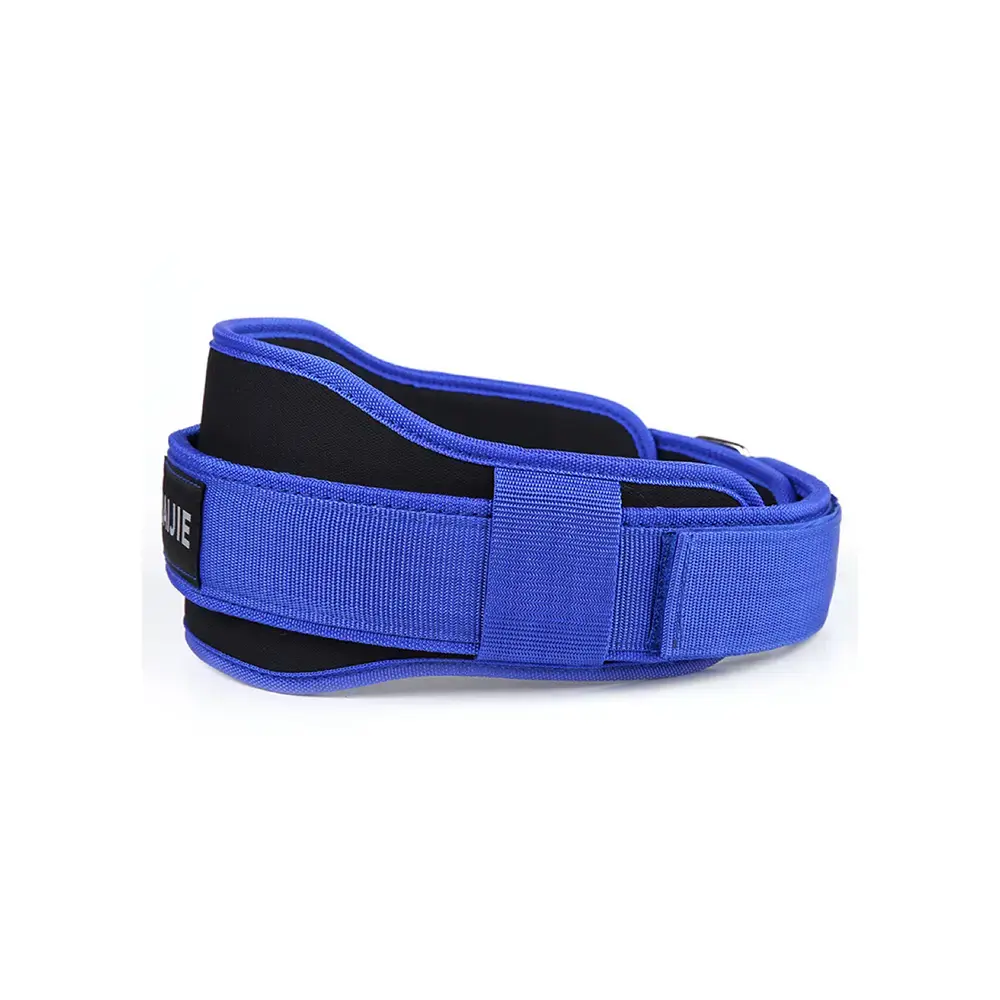
Moderate support strength (40-60 MMHG pressure value) : It provides basic spinal support through a moderate inner hard backing plate (such as single or double layer nylon composite steel plate), avoiding full rigid compression and allowing users to still sense the force feedback of the core muscle group during the movement.
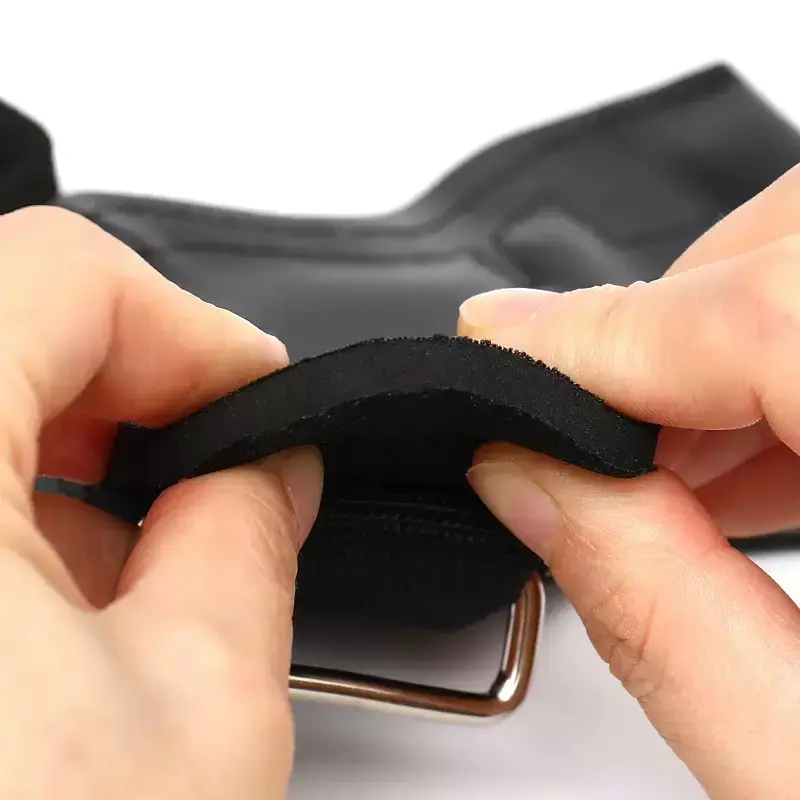
Flexible fitting material: The surface layer is made of breathable mesh fabric or micro-elastic synthetic leather (with a thickness of approximately 1.2-1.5mm), and the inner lining is skin-friendly sponge (with a density of 30-40kg/m³), reducing friction and irritation to the skin and adapting to the wearing habits of beginners who have not yet stabilized.
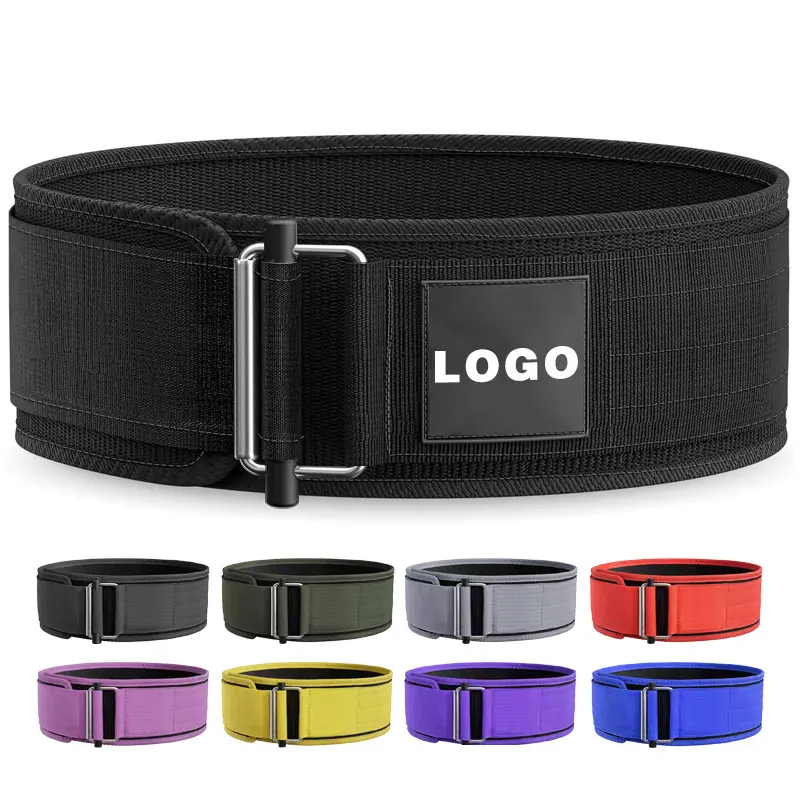
Standardized width design (7-8cm) : Matches the hip and lumbar widths of most trainees to avoid local compression caused by being too narrow or movement interference caused by being too wide. For the opening type, it is preferred to choose "double-sided adjustable buttons" (such as traditional pin buttons or simple Velcro) to reduce the difficulty of putting on and taking off.
Procurement Notice: For such users, it is recommended to focus on the basic multi-functional belt - which provides basic support for compound movements such as squats and deadlifts, and at the same time guides users to establish the correct core force application awareness through moderate hardness. The accompanying "Wearing tutorial Illustration" or "Beginner's Guide" can significantly enhance confidence in purchasing decisions.
Second, the advanced to senior stage: Performance requirements oriented towards "specialized enhancement"
Training characteristics: Users with over one year of training experience and who perform squats or deadlifts weighing more than twice their body weight already have a strong ability to control their core muscles independently. However, when facing extreme weights (such as over 90% of 1RM) or high-frequency training (more than three times a week of heavy weight training), the demand for dynamic protection of the spine increases sharply. Such users' reliance on equipment has shifted from "auxiliary protection" to "performance enhancement", pursuing precise mechanical support and ultimate wearing adaptability.
Core requirement: Experienced trainers need the belt to provide "precise zoned support" - forming a high-pressure stable zone in the lumbar segment (L3-L5 area), while maintaining moderate flexibility in the hip transition zone to balance spinal protection and movement smoothness. In addition, frequent use places higher demands on the durability of the belt (such as the anti-deformation of the backing plate and the wear resistance of the buckle).
Compatible belt features
High-strength support (70-100mmHg pressure value) : It adopts a multi-layer composite structure (such as 3-5 layers of carbon fiber/glass fiber reinforced backing plates), and designs "raised pressure zones" for key areas of the lumbar vertebrae (2-3mm thicker than other parts). Through physical structure, it enhances the axial stability of the spine and reduces the pressure on intervertebral discs under heavy weight loads.
Professional-grade material and process: The surface layer is made of tear-resistant synthetic leather (1.8-2.2mm thick) or wear-resistant nylon coating, and the inner lining is high-density memory foam (50-60kg/m³), which takes into account both anti-friction and pressure dispersion. Some high-end models will incorporate a ventilation hole matrix or a honeycomb-shaped air duct layer to relieve the stuffiness caused by long-term training.
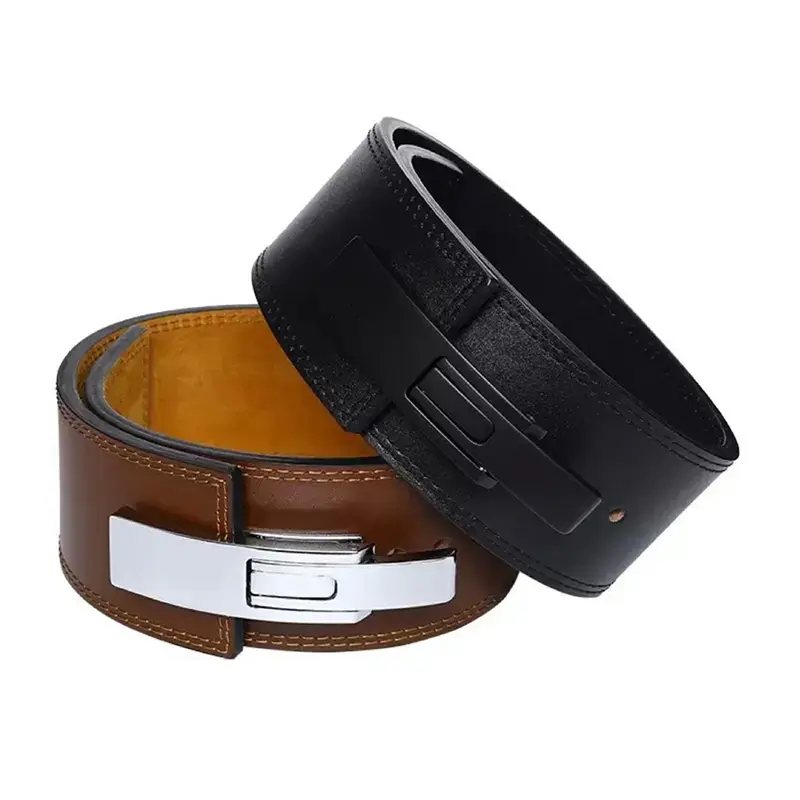
Precise fit design: The opening type tends to be "single-side quick-release buckles" (such as lever buckles or button buckles), supporting quick on-off and adjustment accuracy up to 1cm level. The width of the belt is subdivided according to the user's body type (for example, the narrow version is 6-7cm suitable for tall and slender people, and the wide version is 8-9cm suitable for trainers with a larger core circumference), and even provides "customized scale marks" to help users find the best wearing position (usually 2-3 finger-widths above the hip bone).
Procurement Notice: Such users are highly sensitive to the "professional attributes" of belts. When recommending, you can emphasize selling points such as "competition-level support", "zoned pressure technology", or "high-frequency training durability". The accompanying "Weight range Matching suggestions" (such as choosing model XX for under 80kg and model XX for over 100kg) can help users quickly match their own needs.
Third, hidden variables: The moderating role of training types and individual differences
In addition to experience level, the specific project preferences and physical conditions of the trainer will further influence the choice of belt:
Training type:Users who focus on squats may need a wider lumbar support area (to match the mechanical characteristics of the forward tilt of the spine during squats); Deadlift enthusiasts, on the other hand, pay more attention to the flexibility of the hip transition zone (to avoid the belt restricting the range of motion when lifting from the bar). Olympic weightlifters (snatch/clean and jerk) tend to choose lightWeight Belts that provide concentrated support due to the fast pace of their movements.
Individual differences: People with congenitally weak core muscles (such as those who sit for long periods of time) may require slightly higher support intensity even if they have less experience. For trainees with old spinal injuries (such as mild intervertebral disc protrusion), regardless of their experience, they should give priority to choosing belts with "medical-grade decompression design" (such as those with silicone buffer strips embedded).
Procurement Notice: At the retail end, simple questionnaires (such as "What are your main training items?") can be used. What is the current maximum squat/deadlift weight? Or wearable guidance services can help users more accurately identify their needs, thereby enhancing product matching and user satisfaction.
Fourth, Conclusion: The cognitive upgrade from "selling equipment" to "selling solutions"
The selection of a weightLifting Belt is essentially a "dynamic adaptation" process between the trainer and the equipment. What beginners need is "guided protection" to help them build confidence and ability within their safety boundaries. Experienced trainers pursue "performance-level support" to meet the physical demands under extreme challenges. For the retail end, understanding this differentiation logic can not only optimize product recommendation strategies but also build user trust through professional services - after all, a truly suitable belt is not only a protective tool but also an invisible boost for trainers to break through themselves.