
Leave Your Message



Rapid Identification Methods for Genuine vs. Faux Leather
In the field of personal protective equipment, the selection of materials is directly related to the protective performance, service life and user experience of the products. Genuine leather and faux leather materials are widely used in protective gloves, work clothes and other equipment. Accurately distinguishing between the two is crucial for purchasing decisions. This article will systematically analyze the essential differences between genuine leather and imitation leather, and provide a set of effective and rapid identification methods.
First, Fundamentals of Materials Science: The essential differences between structure and composition
The biological characteristics of the dermis
The dermis is derived from the original skin of animals, and its unique biological structure determines its outstanding performance. The cross-section of the dermis presents a distinct three-layer structure: the epidermis is extremely thin and is usually removed during the tanning process; The dermis contains intricate bundles of collagen fibers, forming a three-dimensional reticular structure. The subcutaneous tissue is removed during processing. This natural fiber structure endows genuine leather with excellent breathability, tear resistance and durability. At the microscopic level, collagen fiber bundles are arranged in a three-dimensional interwoven manner, with fiber diameters ranging from 20 to 200 micrometers, forming natural breathable channels and temperature regulation systems.
The artificial synthetic characteristics of faux leather
Faux leather materials belong to high-molecular polymer products and are mainly divided into three categories: PVC (polyvinyl chloride), PU (polyurethane), and microfiber. Its basic structure includes:
The base layer: It is usually supported by textile materials such as polyester and cotton fiber
Coating: High molecular polymers form a continuous surface through methods such as scraping and impregnation
Embossed layer: It simulates the texture effect of natural leather through high-temperature roller pressing
From the perspective of chemical composition analysis, PVC material relies on plasticizers to achieve flexibility, PU acquires elasticity through the adjustment of molecular chain structure, while microfibers imitate the structure of genuine leather, their fibers are synthetic fibers arranged in a directional manner (usually island fibers), lacking the random network structure of natural leather.
Second, sensory identification method: A traditional and effective initial screening
Key points of Visual inspection
The surface of natural leather has indelible natural marks, including neck wrinkles, scratches and insect bite marks. These "defects" precisely become the positive features for identification. Its pores are arranged irregularly, and there are differences in depth and shape. Under a magnifying glass, the cross-section of the dermis shows closely arranged collagen fiber bundles, presenting a distinct three-dimensional layering effect.
The faux leather material exhibits overly perfect characteristics: the surface texture is highly regular, the pore arrangement is mechanically repetitive, and the depth is exactly the same. In cross-sectional observation, a distinct textile substrate or a uniform polymer layer can be seen.
Differences in tactile experience
The touch of genuine leather has the characteristic of changing over time: it is slightly rough at the beginning, gradually becomes smooth with use, and there are subtle differences in the feel of different parts. Its surface temperature conduction is delayed, and it does not absorb heat rapidly at the moment of touch.
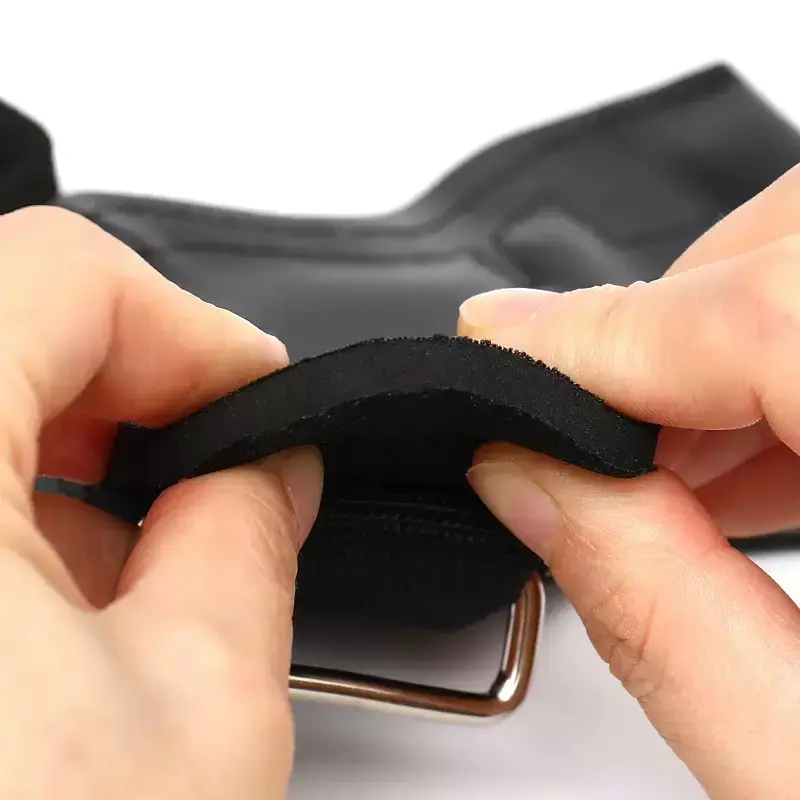
The faux leather material always maintains a consistent slippery feel, with rapid temperature conduction, and a cool sensation is immediately felt upon contact. When bent, genuine leather shows natural and soft multiple folds, while imitation leather produces uniform single-arc bends.
Olfactory discrimination features
After tanning, genuine leather still retains a faint protein smell, similar to the unique fragrance of leather. This smell is harmless to the human body and will gradually fade. Imitation leather, on the other hand, has a distinct smell of high-molecular materials, and some low-priced products may even release pungent chemical odors.
Third, physical performance testing method: A key step in scientific verification
Combustion test analysis
Take a small amount of edge material for a combustion test:
When the genuine leather burns, it produces a protein burnt smell similar to that of burning hair. After the flame goes out, it leaves behind a brittle black ash
When PVC imitation leather burns, it gives off a pungent chlorine smell. The base of the flame is green and goes out immediately when removed from the fire
When PU imitation leather burns, it gives off a pungent smell of molten plastic, and the molten material drips and keeps burning
Water absorption and air permeability test
Genuine leather has natural moisture-absorbing and moisture-releasing properties
Water drop test: Water droplets will slowly penetrate and be absorbed on the surface of the genuine leather
Breathability test: Cover the material with the rim of a cup filled with warm water, and fine water vapor will gradually appear on the surface of the genuine leather
The faux leather material exhibits complete hydrophobicity. Water droplets form beads on the surface and remain in their original shape. During the air permeability test, no water vapor forms at the mouth of the cup.
Mechanical property response
Material differences can be observed through simple mechanical tests:
Tensile test: When the dermis is stretched, it shows anisotropy, and the elongation in different directions varies significantly (usually reaching a difference of 15% to 30%).
Compression test: When the dermis is compressed, sunburst radial wrinkles form, which gradually return to their original shape upon release
Temperature response: The hardness of genuine leather changes slightly in low-temperature environments, while that of faux leather materials becomes significantly harder
Fourth, microstructure identification method: Precise judgment at the laboratory level
Cross-sectional analysis technology
The cross-section of the dermis under the microscope presents the following characteristics:
The collagen fiber bundles are interwoven in a three-dimensional pattern
The diameter of the fibers gradually thickens from the surface to the bottom layer
The direction of fiber arrangement is random
The cross-section of the faux leather material shows:
PVC/PU type: The surface is a continuous polymer film, and the bottom layer is a textile substrate
Microfiber type: Although it imitates the structure of the dermis, the arrangement of the fibers shows a regular and directional pattern
Infrared spectroscopy analysis
Fourier Transform infrared spectroscopy (FTIR) can provide conclusive chemical evidence:
Characteristic absorption peaks appear in the dermis in the amide I band (1600-1700cm⁻¹) and the amide II band (1480-1575cm⁻¹)
A strong carbonyl absorption peak was observed in the PU material near 1730cm⁻¹
The PVC material exhibits characteristic absorption peaks of C-Cl bonds at 1250cm⁻¹ and 1330cm⁻¹
Fifth, the application of professional identification tools
Portable detection equipment
Modern technology provides a variety of portable tools for on-site identification:
Leather fiber inspection lens: Can magnify up to 200 times to observe the fiber structure
Microporous detector: Measures the air permeability of materials. For genuine leather, it usually reaches 8-15mg/cm²·h
Surface tension test pen: The surface tension of genuine leather is usually greater than 72 dynes, while that of imitation leather is less than 40 dynes
Chemical reagent detection
Specific chemical reagents can provide auxiliary judgment:
Acetone wipe test: After being wiped with acetone, the color of genuine leather slightly darkens, while the surface of PU imitation leather may show dissolution
Acid and alkali test: Genuine leather shows a certain tolerance to weak acids and alkalis, while imitation leather may experience color changes or material damage
Sixth, industry standards and certification systems
International Leather Certification mark
Understanding the industry certification system helps to quickly identify:
Genuine leather mark: A pure natural leather label certified by the International Leather Institute
LWG Certification: Leather Working Group Certification, ensuring environmental compliance
Material marking: According to international labeling regulations, Genuine Leather products must be clearly marked "Genuine Leather"
Reference for testing standards
Professional testing institutions usually refer to the following standards:
ISO 17131:2012 Leather - Microstructure Identification
ASTM D5716-95 Standard for Chemical Composition Analysis of Leather
Test standard for physical properties of leather EN 15987:2015
Accurately distinguishing genuine leather from faux leather materials requires the comprehensive application of sensory experience, physical tests and scientific and technological means. In the decision-making process of purchasing protective equipment, this ability to distinguish directly affects the accuracy of product selection and the rationality of value assessment. With the continuous development of material technology, the visual differences between new faux leather materials and genuine leather are gradually narrowing, but their essential differences in microstructure, physical properties and chemical characteristics still exist. Establishing a systematic material identification capability not only helps to make precise purchasing decisions but also serves as an important guarantee for ensuring the performance and safety of protective equipment. In an increasingly complex market environment, this professional discrimination ability will become a key link in supply chain quality management, providing scientific and technological basis for product value assessment.