
Leave Your Message



SBR Professional Fitness Knee Pads: The effect of knee pads' wrapping on knee joint pressure relief
During fitness, physical training or high-intensity exercise, the pressure on the knee joints far exceeds that in daily activities. Whether it's squats, deadlifts or jumping movements, improper force application can lead to joint wear and tear, ligament tension and even chronic injuries. A SBR professional fitness knee pad with excellent wrapping performance can effectively distribute pressure, provide support and reduce discomfort during exercise.
So, exactly how does the wrapping property of knee pads affect the health of the knee joint? What kind of design can truly relieve stress? This article will deeply analyze the scientific protection mechanism of professional fitness knee pads from five core dimensions: pressure dispersion principle, wraparound structure design, SBR material properties, sports adaptability and long-term protection effect, to help you understand why wraparound is a key indicator of knee pad performance.
First, the sources of pressure on the knee joint and the buffering effect of knee pads
During exercise, the pressure on the knee joint mainly comes from vertical impact force, torsional force and muscle tensile force. The core function of knee pads is to optimize the distribution of these forces through structural support and material buffering.
1. The main force-bearing point of the knee joint during exercise
The patella (kneecap) : It bears several times the body weight during squats or jumps (for example, it can reach 8 to 10 times the body weight during squats). If the trajectory deviates, it is prone to wear and tear.
Medial and lateral collateral ligaments: They are responsible for stabilizing the knee joint, but excessive torsion or lateral force may cause a strain.
Tendons and fat pads: Such as the patellar tendon and the subpatellar fat pad, are prone to inflammation due to friction or compression during repetitive movements.
2. How do knee pads relieve pressure?
Mechanical dispersion: Through pressure design, the pressure in the local high-pressure area (such as below the patella) is evenly distributed to a larger area.
Dynamic support: Strong knee pads can limit unnecessary large displacements (such as left and right knee swaying), reducing the additional burden on ligaments.
Shock absorption and buffering: By combining elastic materials (such as SBR) to absorb the impact force upon landing, the load directly borne by the joints is reduced.
Second, the wraparound design: The core of the protective effect of knee pads
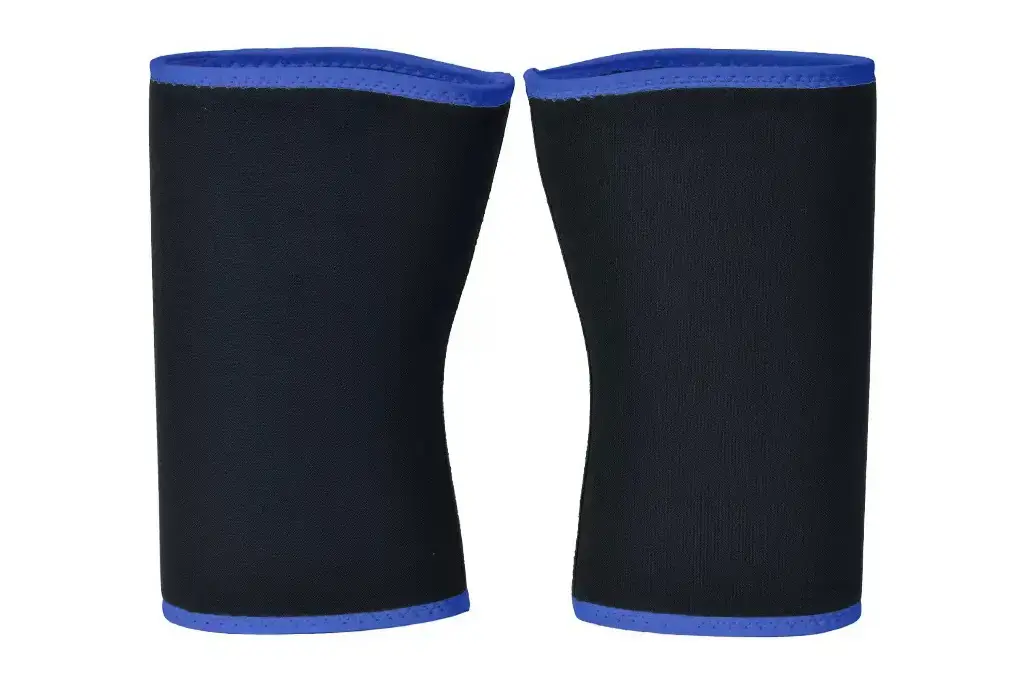
The wrapping property of knee pads does not merely refer to "closely adhering to the skin", but rather achieves precise support through structural mechanics and material elasticity.
1.The key elements of wrapping
Three-dimensional stereoscopic cutting: It conforms to the natural curved surface of the knee joint (such as patellar protrusion, tibial plateau), avoiding local compression or gaps that may cause support failure.
Pressure gradient distribution: High-quality knee pads will apply moderate pressure (about 15-20 MMHG) around the patella, gradually decreasing towards the periphery, stabilizing the joint without hindering blood circulation.
Elastic memory rebound: The wrapping layer needs to maintain continuous adhesion during movement and will not become loose or curl due to repeated bending.
2. Emphasis on protection for different wrapping methods
Full wrap type (covering several centimeters above and below the knee) : Suitable for comprehensive training, providing overall stability.
Patellar focal type (focusing on the kneecap) : This type is designed for movements that put a lot of pressure on the patella, such as squats and lunges, to reduce cartilage friction.
Spiral pressure type (adjustable tightness through straps) : Allows for personalized adjustment of pressure distribution, suitable for different body types.
3. The risk of over-wrapping
If the knee pads are too tight (such as leaving obvious marks or hindering blood flow), they may instead cause:
Obstruction of venous return leads to swelling around the knee.
Muscle dependence is enhanced, and long-term use weakens one's own stability.
Therefore, moderate wrapping (which can both fix the joint and not affect movement) is the design balance point of professional knee pads.
Third, SBR material: The cornerstone of wrapping and protective functions
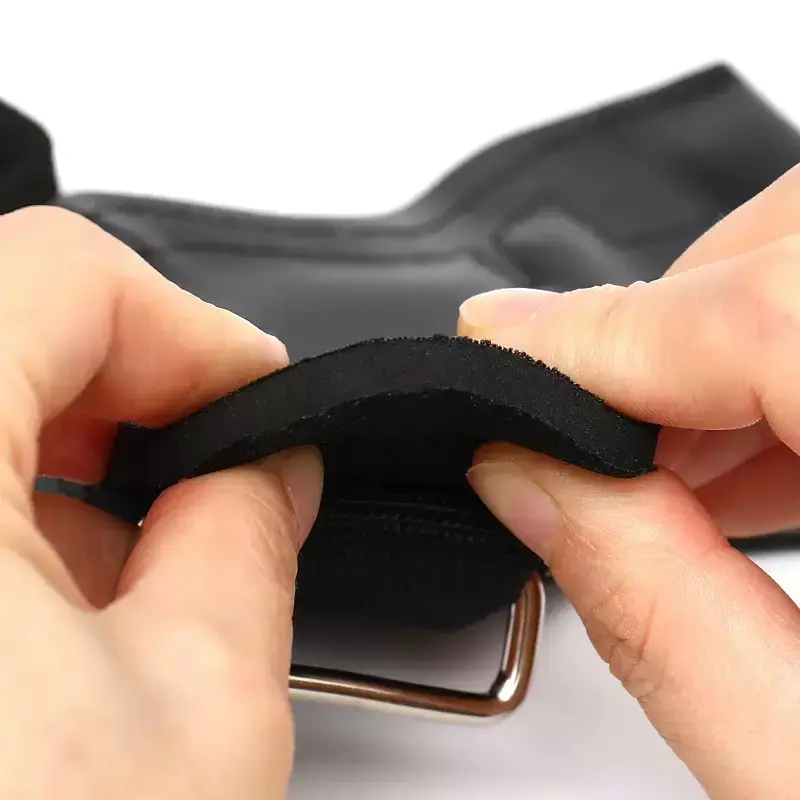
SBR (styrene-butadiene rubber) is a commonly used elastic material for professional fitness knee pads, and its properties directly affect the wrapping sensation and durability.
1. Physical advantages of SBR
High elasticity and resilience: It can closely fit the joint curve and quickly return to its original shape after exercise, avoiding relaxation.
Wear-resistant and tear-resistant: Compared with ordinary rubber or fabric, SBR is more resistant to repeated friction and stretching (such as patellar friction during squats).
Moderate breathability: Although not as breathable as mesh fabric, high-quality SBR will balance the requirements of protection and heat dissipation through a micro-porous structure design.
2. Composite applications of SBR with other materials
SBR+ sponge layer: It increases buffering in the pressurized area (such as below the patella) to reduce the feeling of skin pressure.
SBR+ Lycra blend: Enhances lateral elasticity to ensure unrestricted leg movement during wrapping.
3. The influence of material and process on wrapping property
Seamless splicing technology: Reduces friction and discomfort at the seams, especially suitable for long-term wearing.
Hot-press forming process: It makes the knee pads fit the knee contour more closely and avoids the local bulging caused by traditional sewing.
Fourth, adaptation to sports scenarios: Different training requirements for wrapping
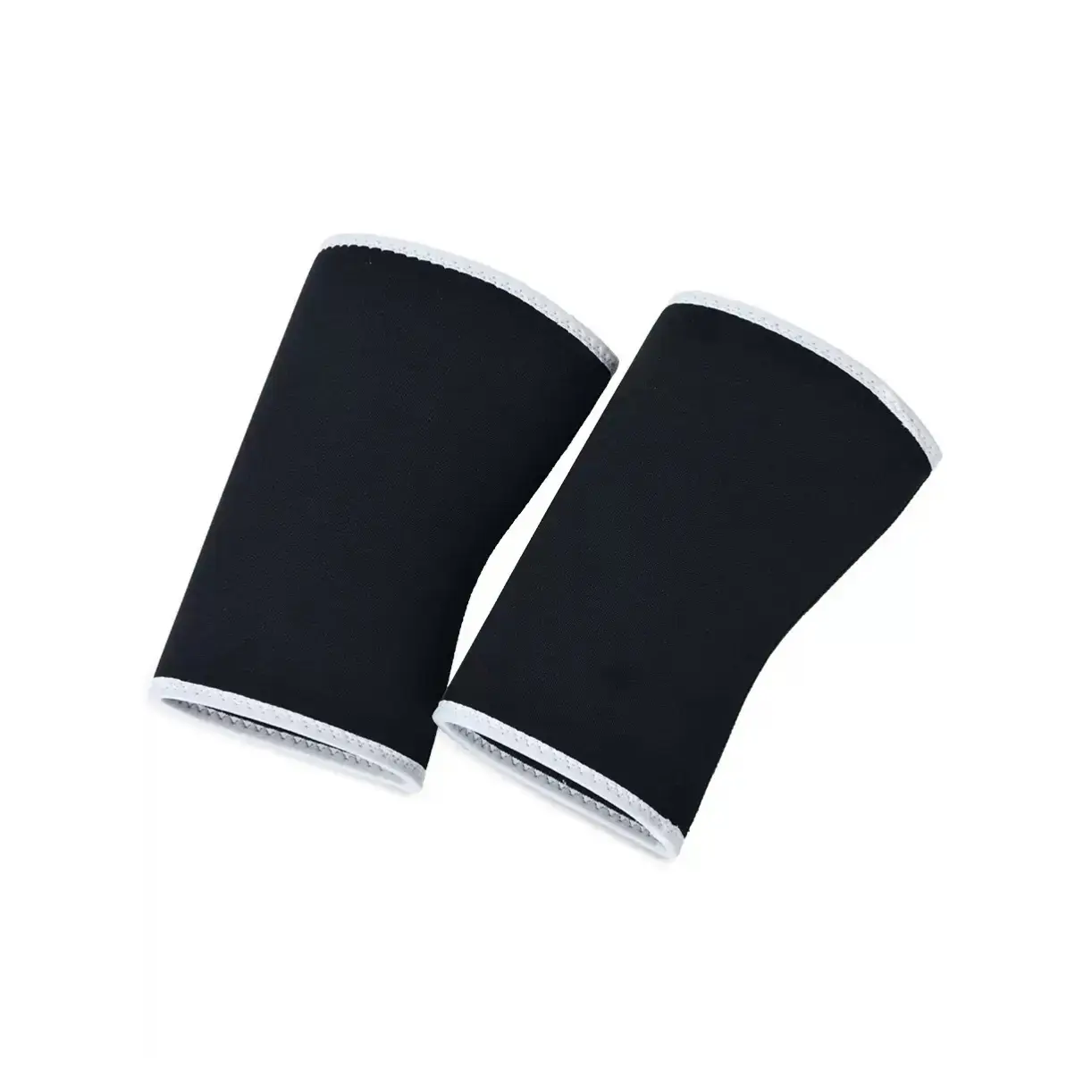
The wrapping property is not "the tighter, the better", but rather needs to be matched with the specific movement pattern.
1.High-weight training (such as squats, deadlifts)
Strong support wrapping is needed to ensure that the knee pads do not shift under the maximum weight, with a focus on protecting the patella and ligaments.
It is recommended to adopt a pressure-adjustable design (such as double-sided straps), which can be adjusted in tightness according to the load.
2. Explosive sports (such as jumping and sprinting)
Emphasis should be placed on dynamic response wrapping. Knee pads need to quickly follow the extension/bending of the knee joint to reduce inertial impact.
The SBR material with better elasticity is more flexible than heavy protective gear.
3. Rehabilitation and preventive training
The wrapping property is mainly for comfort, avoiding excessive restrictions on joint movement while providing basic stability.
Fifth, long-term protective effect: How does the wrapping property extend the lifespan of knee pads?
A knee pad with excellent wrapping performance can not only relieve stress in the short term but also enhance its long-term usage value in the following ways:
1.Reduce the failure of protection caused by the displacement of knee pads
If the knee pads slide during exercise, the originally designed pressure points (such as patellar supports) will shift and lose their protective significance.
2. Reduce skin friction and discomfort
Precise wrapping reduces the relative movement between the knee pads and the skin, avoiding redness or allergies.
3. Maintain the active training balance of muscles and ligaments
Excessive reliance on knee pads may lead to compensatory muscle weakening, while moderately wrapped knee pads can provide support while maintaining natural joint range of motion.
Conclusion: Why is the wrapping property the core of professional knee pads?
In fitness or high-intensity exercise, the protection of the knee joint requires scientific structural design, and the wrapping property is a key link in the connection materials, mechanics and ergonomics. High-quality SBR professional fitness knee pads have passed:
Precise pressure distribution reduces the burden on joints.
The dynamic bonding wrapping structure enhances stability.
The high-elasticity SBR material strikes a balance between protection and comfort.
Whether you are a professional athlete or a fitness enthusiast, choosing a knee pad with excellent wrapping performance is a long-term investment in the health of your knee joints.